
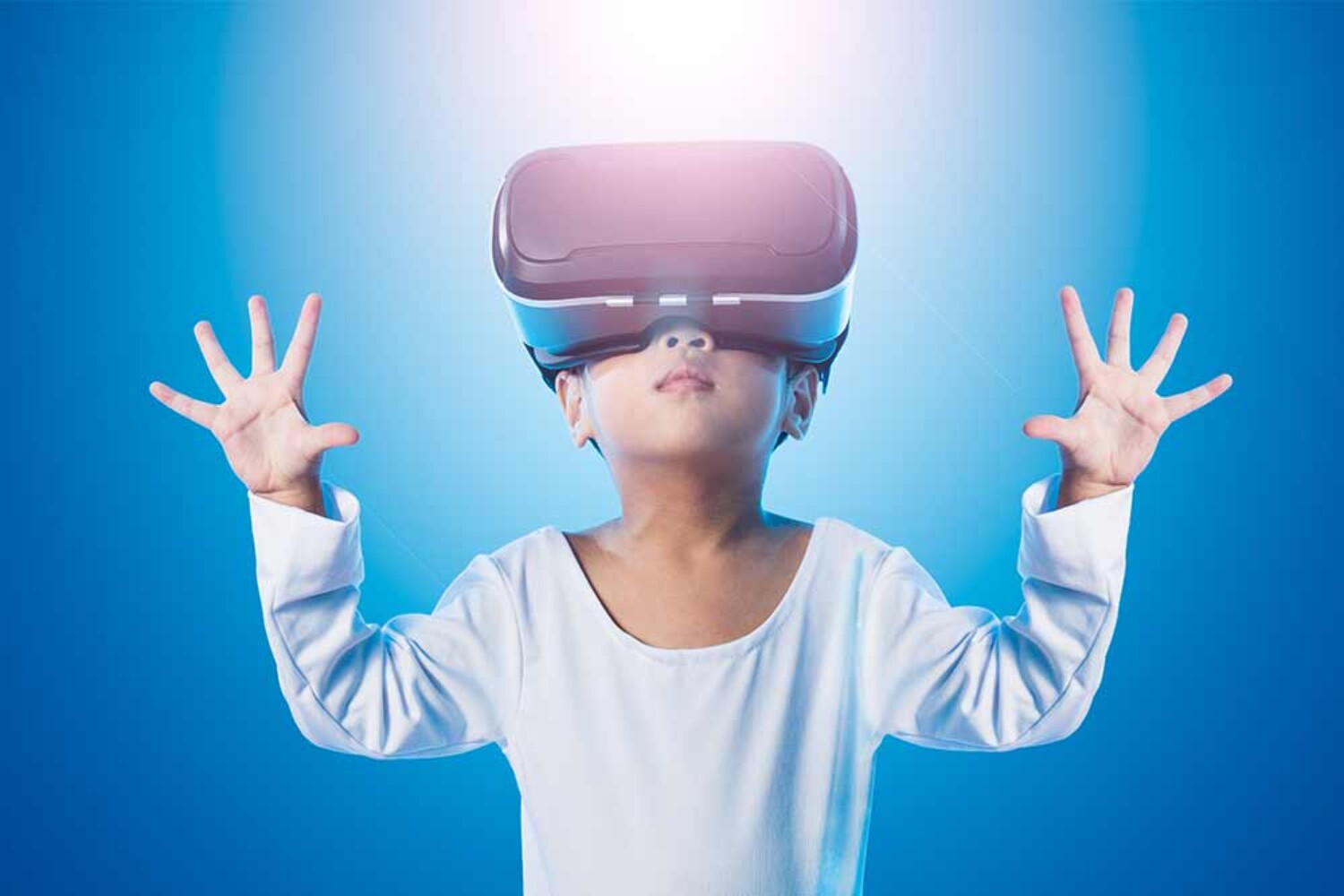
Virtual reality (VR) and augmented reality (AR) are transforming how we learn, train, communicate and experience digital environments. From healthcare and professional training to museums, immersive documentaries and virtual tours, these technologies offer exciting opportunities.
Understanding virtual reality health risks is increasingly important as immersive technologies become more widely used in education, healthcare and professional training. Although many reported side effects are temporary, awareness of virtual reality health risks can help both users and content creators make informed decisions about safe and comfortable immersive experiences.
But as immersive devices become increasingly accessible, an important question remains: What are the potential health risks of virtual reality?
Understanding virtual reality health risks is essential for users, educators, healthcare professionals and VR content creators.
In June 2021, the French Agency for Food, Environmental and Occupational Health & Safety (ANSES) published a scientific assessment examining the potential health effects of VR and AR technologies.
Additional research, including a systematic review published in 2024 on VR safety in children, has provided further insights while highlighting important gaps in long-term evidence.
This article examines the scientific findings and provides practical recommendations for safer and more comfortable immersive experiences.
Virtual Reality Health Risks: What Does Research Tell Us?
Virtual reality immerses users in digitally created or recorded environments, sometimes producing a convincing sensation of presence and movement.
Unlike augmented reality, which overlays digital information onto the physical world, immersive VR replaces much of the user’s normal visual surroundings.
This can temporarily affect how the brain processes visual, vestibular and body-position information.
According to ANSES’s scientific assessment of virtual and augmented reality, the main identified concerns include:
- Cybersickness and motion-related discomfort.
- Temporary changes in balance and sensorimotor coordination.
- Visual discomfort and eye strain.
- Possible sleep disruption associated with evening light exposure.
- Risks associated with certain visual flickering effects in susceptible individuals.
These effects vary considerably depending on the user, the VR content, the equipment and the conditions of exposure.
Importantly, the available evidence does not establish that every VR session causes harm. Many reported effects are temporary, while the consequences of frequent, prolonged use remain insufficiently studied.
1. Cybersickness: Why Virtual Reality Can Cause Nausea
Cybersickness is among the most extensively studied adverse effects associated with immersive virtual reality.
It shares several characteristics with motion sickness, although the mechanisms are not identical.
What causes cybersickness?
One widely discussed explanation is sensory conflict.
In a VR experience, your eyes may perceive movement while your vestibular system, located in the inner ear, indicates that your body is stationary.
For example, imagine travelling rapidly through a virtual environment while sitting in a chair.
Your brain receives visual signals suggesting movement, but your body does not experience the corresponding physical acceleration.
This mismatch can contribute to symptoms such as:
- Nausea and dizziness.
- Headaches.
- Sweating or pallor.
- Disorientation.
- General discomfort and fatigue.
- Temporary problems with balance.
Symptoms may appear within minutes in susceptible individuals.
However, cybersickness is not inevitable. Some people experience little discomfort, while others are more sensitive to particular types of movement or visual stimulation.
How can cybersickness be reduced?
The design of the virtual environment plays an important role.
Sudden virtual acceleration, uncontrolled camera movements, visual instability and unexpected rotations may increase discomfort.
For immersive video production, particular attention should therefore be paid to camera movement, image stabilization and the spectator’s visual orientation.
A comfortable VR experience does not necessarily require spectacular movement. Sometimes, a stable camera and carefully considered spatial composition create a stronger sense of presence.
2. VR Headsets, Balance and Sensorimotor Effects
Virtual reality can temporarily modify the relationship between visual information and the body’s normal spatial references.
After removing a headset, some users may experience mild disorientation or temporary changes in balance, coordination or spatial perception.
ANSES reports that immersive exposure may temporarily affect sensorimotor performance, including manual dexterity and the ability to orient the body.
These effects are particularly relevant when users intend to drive, operate machinery or perform activities requiring concentration immediately after a VR session.
How long should you rest after VR?
ANSES recommends a recovery period of one to two hours after using VR or AR devices, particularly before returning to activities requiring strong concentration or coordination.
This is a precautionary recommendation rather than evidence that every user will remain impaired for that duration.
Users should also wait until any symptoms have completely resolved.
For professional VR demonstrations, providing seating, clear instructions and sufficient recovery time can help create a more comfortable experience.
3. Does Virtual Reality Cause Eye Strain?
Eye strain is another important consideration when discussing virtual reality health risks.
VR headsets use optical systems to create the perception of a three-dimensional environment.
In stereoscopic VR, each eye receives a slightly different image, allowing the brain to interpret depth.
However, the eyes’ focusing and alignment mechanisms do not always behave as they would when looking at real objects at different distances.
This phenomenon is commonly discussed in relation to the vergence-accommodation conflict.
Possible visual symptoms
Depending on the user and the experience, symptoms may include:
- Tired or uncomfortable eyes.
- Temporary blurred vision.
- Difficulty focusing after removing the headset.
- Headaches.
- Visual discomfort during stereoscopic viewing.
These symptoms may become more noticeable when the headset is poorly adjusted or when visual content is uncomfortable to view.
How to improve visual comfort
Several practical considerations can make a difference.
Ensure the headset is properly fitted, adjust its interpupillary distance where supported and use appropriate vision correction when needed.
Take breaks, particularly when experiencing fatigue.
Content creators should also pay attention to image alignment, optical distortion, visual stability and stereoscopic consistency.
For 360° stereoscopic productions, correct image processing is especially important because inconsistencies between the left-eye and right-eye views can contribute to discomfort.
4. Blue Light, VR Headsets and Sleep Disruption
Most modern VR headsets use displays that emit visible light, including blue wavelengths.
Blue light is a natural component of daylight and plays an important role in regulating our biological clock.
However, exposure to artificial light during the evening or at night can influence circadian rhythms.
How does VR affect sleep?
Our circadian system helps regulate sleep and wakefulness by responding to environmental light.
Exposure to light late in the evening, particularly light containing blue wavelengths, can influence melatonin regulation and delay sleep onset.
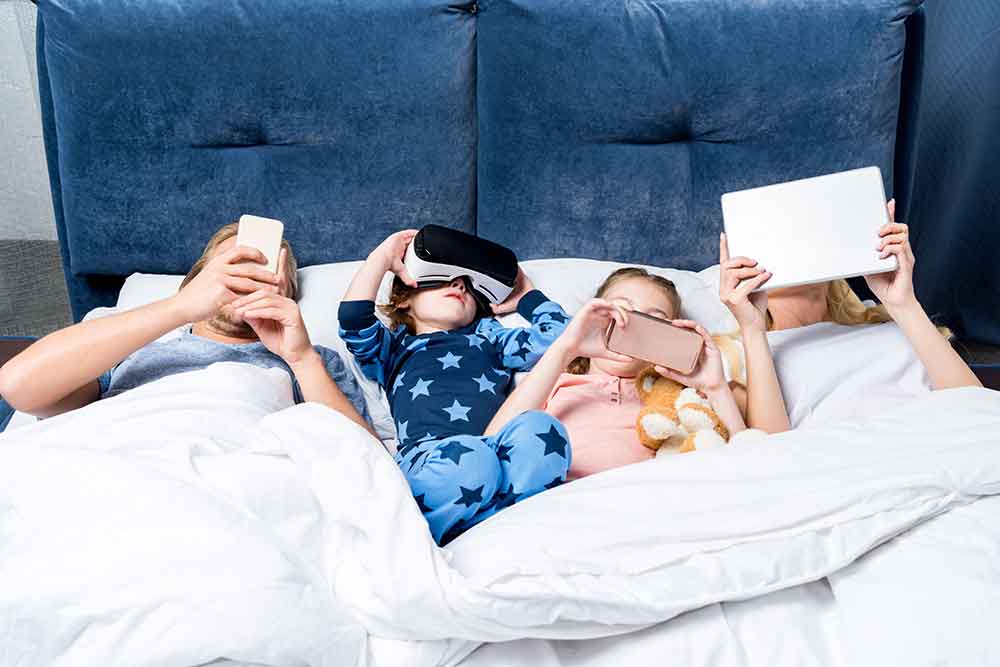
VR headsets may therefore contribute to sleep disruption when used shortly before bedtime.
The degree of disruption depends on several factors, including exposure duration, light intensity, timing and individual sensitivity.
ANSES recommends avoiding screen exposure during the two hours before bedtime, especially for children and teenagers.
Can blue light from VR headsets damage the eyes?
This question requires careful scientific interpretation.
ANSES’s 2019 assessment of LED lighting and blue light identified retinal phototoxicity risks associated with certain intense exposures and highlighted concerns about disruption of biological rhythms.
However, those findings do not demonstrate that ordinary use of consumer VR headsets causes retinal degeneration or age-related macular degeneration.
Exposure intensity, spectral composition and duration are essential factors when assessing potential risks.
There remains insufficient long-term research to draw definitive conclusions about the retinal consequences of repeated, prolonged headset use.
It is therefore important to distinguish between known effects of certain light exposures and health effects specifically demonstrated for virtual reality headsets.
For further reading, consult ANSES’s scientific opinion on virtual and augmented reality.
5. Screen Flicker, Migraines and Photosensitive Epilepsy
Some electronic displays produce rapid variations in light output, referred to as temporal light modulation.
These variations may occur even when the user does not consciously perceive flickering.
Depending on the display technology, brightness, contrast and the individual’s sensitivity, visual modulation can contribute to discomfort.
For some users, particular visual patterns or flashing sequences may provoke headaches or migraines.
In people with photosensitive epilepsy, certain flashing visual stimuli may trigger seizures.
ANSES identifies this as a potential concern for susceptible individuals using immersive display technologies.
However, the risk cannot be determined from the display refresh rate alone. Factors such as flash frequency, luminance contrast, visual pattern and field of view also matter.
Anyone with photosensitive epilepsy, or a history of seizures triggered by visual stimuli, should seek medical guidance and follow appropriate device safety recommendations before using immersive technologies.
6. Is Virtual Reality Safe for Children?
The use of VR by children and teenagers deserves particular attention.
Immersive technologies are increasingly being explored for education, healthcare, rehabilitation and entertainment.
Nevertheless, questions remain regarding developing visual systems, sensory adaptation and the consequences of repeated exposure.
What does the research say?
A systematic review published in the European Journal of Pediatrics in 2024 examined 26 studies involving children under 14 years old.
The researchers found limited evidence of serious harm from short, supervised exposures, but emphasized that safety reporting was often incomplete.
Some studies reported mild cybersickness symptoms, while other potential adverse effects were poorly measured or insufficiently described.
The review concluded that further research is needed, especially regarding repeated exposures and symptoms occurring during or after VR sessions.
Source: Bexson, Oldham and Wray (2024), Safety of virtual reality use in children: a systematic review.
Practical recommendations for younger users
Children should use VR only with appropriate adult supervision and in accordance with the headset manufacturer’s age restrictions.
Sessions should be adapted to the child’s age and tolerance, with opportunities for rest.
Any discomfort, dizziness, visual disturbance or nausea should lead to an immediate break.
The absence of significant symptoms during a short experience should not be interpreted as proof that prolonged or repeated use is risk-free.
Designing Safer and More Comfortable VR Experiences
Understanding virtual reality health risks is important not only for headset users but also for the professionals producing immersive content.
The creative and technical choices made during production can influence how comfortable an experience feels.
At Visual Solutions 360, attention to visual coherence, camera placement and image quality forms part of our approach to immersive storytelling and 360° production.
Camera stability and movement
Unlike traditional filmmaking, camera movements in 360° video require particular consideration.
In a headset, the viewer can look freely around the scene. Uncontrolled camera movement may create sensations that conflict with the body’s physical state.
Stable filming techniques and carefully managed movements can help reduce potential discomfort.
Image quality and VR post-production
Image alignment, stitching accuracy and stabilization are important considerations in immersive production.
For stereoscopic experiences, maintaining consistency between the two eye views adds another layer of technical complexity.
Accurate VR post-production contributes to visual coherence, although image quality alone cannot eliminate cybersickness.
Discover more about our immersive work through the BREATHE VR documentary, an original 360° film exploring the human experience of premature birth.
BREATHE illustrates how immersive storytelling can create a sense of proximity and emotional connection without relying on constant virtual camera movement.
Session duration and audience experience
Designing an immersive experience also involves considering the audience.
A VR installation in a museum, for example, may be used by visitors with very different levels of familiarity with headsets.
Clear instructions, simple controls, an appropriate physical environment and the possibility of stopping an experience can all help improve accessibility and comfort.
Technical excellence is important, but the experience of the person wearing the headset must remain central to the creative process.
Six Essential VR Safety Tips
Based on ANSES recommendations and available scientific evidence, the following precautions can help reduce virtual reality health risks.
1. Stop immediately if you feel unwell
Remove the headset if you experience nausea, dizziness, sweating, disorientation, eye strain or other unusual symptoms.
Do not attempt to continue through significant discomfort.
2. Allow time to recover after VR
ANSES recommends allowing one to two hours of recovery following VR or AR exposure, particularly before activities demanding attention and coordination.
Wait until symptoms have completely disappeared before returning to tasks such as driving.
3. Avoid VR immediately before bedtime
Consider avoiding screens during the two hours before sleep, especially for children and teenagers.
This can help reduce potential interference with circadian rhythms.
4. Consider individual health sensitivities
People affected by motion sickness, balance disorders, migraines or epilepsy may be more sensitive to immersive technologies.
ANSES also identifies pregnant women among populations for whom precaution is advised.
Individuals with relevant medical conditions should seek professional advice when appropriate.
5. Create a safe physical environment
Before starting a VR session, remove nearby obstacles and ensure sufficient space.
Use the headset’s boundary or guardian system when available.
For standing or room-scale experiences, consider supervision when necessary.
6. Choose comfortable content and suitable equipment
Use properly adjusted headsets, take regular breaks and select experiences appropriate for your tolerance.
For professional demonstrations, consider how the content has been filmed, stabilized and presented.
Even technically sophisticated experiences should offer users the freedom to stop when needed.
What Do We Know About the Long-Term Health Effects of VR?
Despite progress in research, many questions remain unanswered.
Scientific evidence is still limited regarding the effects of frequent or prolonged VR exposure over months or years.
More research is needed to better understand potential consequences for visual development, sensory adaptation, neurological functioning and psychological well-being.
Researchers must also account for the rapid evolution of headset displays, optics and immersive content.
Importantly, a lack of long-term evidence does not establish that VR is harmful, nor does it prove that repeated exposure is completely risk-free.
Responsible use therefore means acknowledging both the technology’s potential and the limits of current scientific knowledge.
Conclusion: Balancing Immersion, Innovation and User Well-Being
Virtual reality offers extraordinary possibilities for education, cultural heritage, healthcare, professional training and immersive storytelling.
Scientific research has identified several potential side effects, particularly cybersickness, temporary balance disturbances, visual discomfort and sleep-related effects.
Many of these symptoms appear to be temporary, while important questions remain about repeated and long-term exposure.
By following appropriate precautions and designing immersive experiences with user comfort in mind, both audiences and creators can make more informed decisions about VR technology.
For VR filmmakers and 360° content producers, visual quality should never be considered separately from the comfort and safety of the audience.
At Visual Solutions 360, we believe thoughtful immersive production combines technical expertise, creative storytelling and respect for the spectator’s experience.
Scientific References and Further Reading
- ANSES — Scientific opinion on potential health effects of virtual and augmented reality (2021, English PDF)
- ANSES — Virtual reality and augmented reality: health risks and recommended precautions (2021, original French publication)
- ANSES — Assessment of the health effects of LED lighting and blue light (2019, French)
- Bexson C., Oldham G. and Wray J. — Safety of virtual reality use in children: a systematic review, European Journal of Pediatrics (2024)
- Antonovics E., Boitsios G. and Saliba T. — Use of virtual reality in children in a broad range of medical settings: a systematic narrative review of recent meta-analyses (2024)
Article reviewed and updated: October 2026. This article is intended for general information and does not replace individual medical advice.