A hands-on review of the battery-powered Pojifi VR head strap, including comfort, fit, safety observations, and the main design flaw I discovered.
The Pojifi Quest 2 head strap with an integrated battery was designed to address two of the most common challenges when using a standalone VR headset: comfort and battery life.
But does this accessory actually improve the experience of using the Oculus Quest 2, now known as the Meta Quest 2?
As a professional working in virtual reality and immersive 360° video production, I regularly use VR headsets to test immersive content, review technical quality, and present virtual experiences to clients and audiences.
In January 2023, I tested the Pojifi battery-powered head strap for the Quest 2, paying particular attention to its ergonomics, battery temperature, attachment system, and ease of use.
Here is my hands-on review, including the advantages and the main limitation I discovered during testing.
Why Use a Battery Head Strap for the Meta Quest 2?
The Oculus Quest 2 is a standalone virtual reality headset that allows users to enjoy immersive experiences without being permanently connected to a computer.
However, battery life can become an issue during extended VR sessions, particularly when running demanding applications, watching immersive videos, or demonstrating experiences to multiple users.
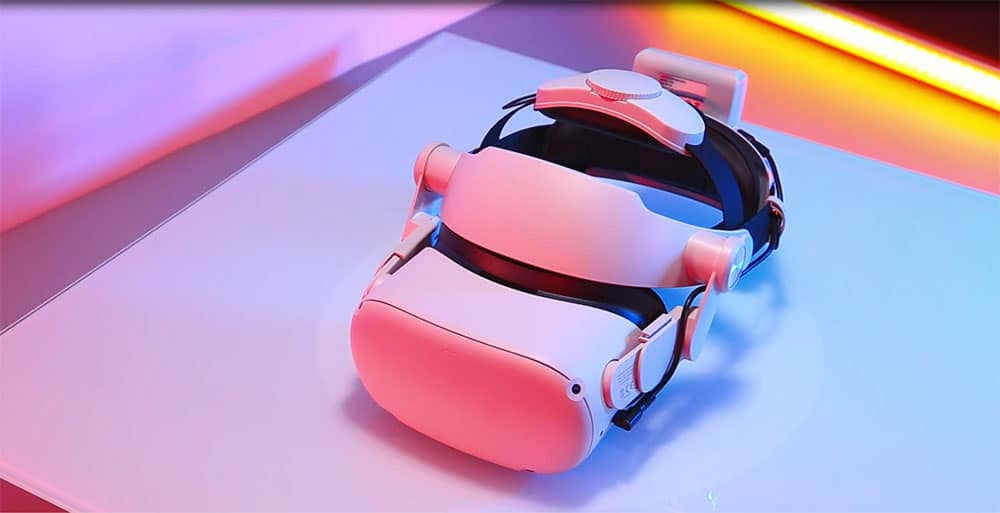
The Pojifi Quest 2 head strap combines two functions:
- An integrated external battery, designed to extend the headset’s operating time.
- An adjustable, padded head strap, intended to improve comfort compared with the original soft strap.
This combination can be particularly useful for VR gaming, professional demonstrations, immersive training, and 360° video presentations.
For professional VR operators, an accessory that reduces interruptions and improves headset comfort can make a significant difference during a busy demonstration day.
Comfort and Ergonomics: Better Than Expected
One of the first things I appreciated about the Pojifi VR head strap was its adjustment mechanism.
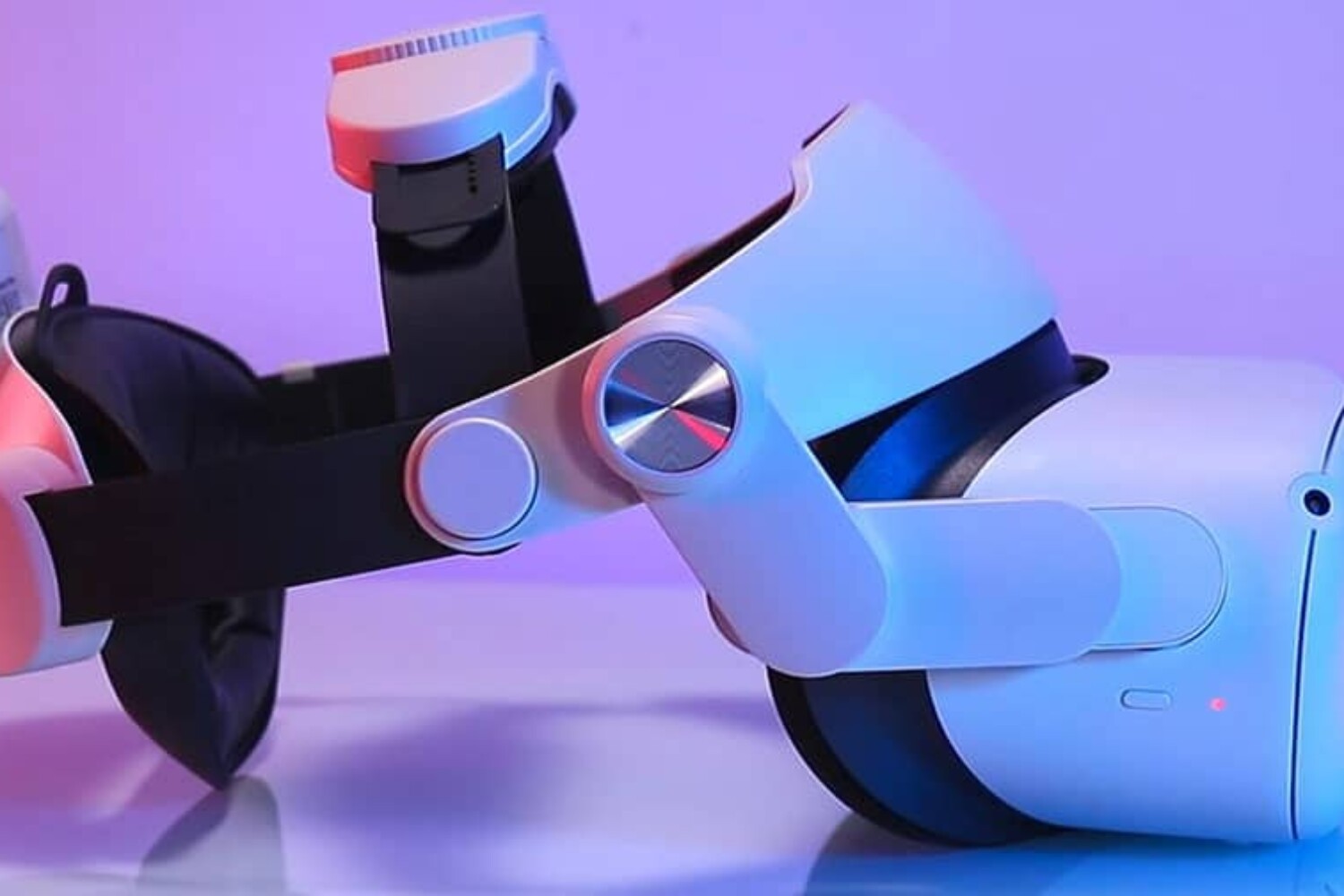
A wheel at the back of the strap makes it easy to tighten or loosen the fit, while the padded materials provide additional support around the head.
The strap is designed to accommodate different head sizes, allowing users to achieve a more comfortable and secure fit.
Naturally, the integrated battery adds weight to the headset.
I initially expected this extra weight to be uncomfortable, especially during longer VR sessions.
Surprisingly, the Pojifi head strap felt lighter and more balanced than I had anticipated.
Its construction helped distribute the weight around my head rather than concentrating it entirely at the front of the headset.
The padding also made the strap comfortable to wear throughout my test.
For users spending extended periods in VR, this is one of the accessory’s strongest advantages.
Integrated Battery: Does the Pojifi Head Strap Overheat?
One of my main concerns about this accessory was its battery.
Placing an additional battery so close to the head naturally raises questions about heat and comfort during prolonged use.
The Pojifi Quest 2 head strap includes an integrated battery that connects to the headset through a USB-C connection, allowing the battery to supply additional power during use.
During my original test, I used the headset for approximately two hours.
What surprised me most was that the battery remained cool to the touch throughout the session.
I did not notice any significant heating or uncomfortable temperature changes.
This was a positive observation, particularly considering the battery’s position at the back of the head.
I also contacted Pojifi to ask about battery safety, and the manufacturer assured me that the battery was designed for this application.
However, it is important to clarify that my personal observation does not constitute an independent battery safety assessment.
As with any rechargeable lithium-ion accessory, users should follow the manufacturer’s instructions, avoid damaged equipment, and monitor the device for unusual heat or physical damage.
How Much Extra Battery Life Does It Provide?
The integrated battery is intended to extend the Quest 2’s runtime, reducing the need for frequent charging.
However, my original test focused primarily on comfort, heat, and the attachment mechanism.
I did not carry out a controlled battery runtime comparison, so I cannot reliably state how many additional hours the Pojifi strap provides.
Its actual performance may vary depending on the VR application, headset settings, battery condition, and usage.
Installing the Pojifi Head Strap on Oculus Quest 2
Installing the Pojifi head strap is relatively straightforward.
The original Quest 2 strap must first be removed, allowing the Pojifi accessory to slide onto the headset’s side mounting points.
Once attached, users can adjust the fit using the wheel at the rear.
The battery can then be connected to the headset using the appropriate USB-C cable.
However, although the installation appears simple, I discovered an important weakness in the attachment design.
The Main Disadvantage: An Attachment That Can Slide Off
During my test, I discovered that the Pojifi head strap did not have a sufficiently secure locking mechanism on the side attachments.
The strap slides onto the Quest 2 headset, but it can also slide off if handled incorrectly.
This happened when my partner, who was less familiar with VR headsets, tried to adjust the headset by pulling at the front rather than using the adjustment wheel at the back.
One of the side attachments slipped out, causing the strap to detach from the headset.
Fortunately, nothing was damaged.
However, I had to explain that the correct way to adjust the head strap was to turn the rear wheel rather than pull on the headset itself.
This is the main design flaw I identified with the Pojifi Quest 2 head strap.
For experienced VR users, this might be manageable with careful handling.
But for public demonstrations, exhibitions, training sessions, or events involving multiple users, it represents a practical concern.
When people are unfamiliar with virtual reality hardware, they naturally try to adjust the headset using whatever feels intuitive.
A more secure attachment mechanism would make the accessory easier and safer to handle in those situations.
For professional applications, reliability and ease of use are just as important as comfort.
Compatibility and Transport: Important Considerations
The Pojifi head strap I tested was designed specifically for the Oculus Quest 2 / Meta Quest 2.
It should not be assumed to fit newer Quest headsets, which use different attachment designs.
Another practical consideration is transport.
Because of its rigid frame and integrated battery, the Pojifi head strap requires more space than the Quest 2’s original soft strap.
If you regularly travel with your headset, you may need a larger protective carrying case.
Not all standard Quest 2 cases can accommodate a rigid battery head strap, so it is worth checking the dimensions before purchasing one.
Pojifi Quest 2 Head Strap: Pros and Cons
What I Liked
- Comfortable padding and adjustable fit.
- Convenient rear adjustment wheel.
- Integrated battery for extended VR sessions.
- Better weight distribution than expected.
- No noticeable battery heating after approximately two hours of use.
- Useful concept for personal VR sessions and professional demonstrations.
What Could Be Improved
- Side attachments can slide off when incorrectly handled.
- Additional weight compared with a basic head strap.
- Larger carrying case may be required.
- Designed for the Quest 2 rather than newer headset generations.
- Additional battery runtime was not measured in a controlled test.
My Verdict: Is the Pojifi Quest 2 Head Strap Worth It?
After testing the Pojifi battery head strap, my overall impression was positive, although there were some important limitations.
The combination of comfortable padding, adjustable fit, and an additional battery made the Quest 2 more pleasant to use.
I was particularly impressed by the weight distribution and the lack of noticeable battery heating during my two-hour test.
However, the attachment mechanism is an important drawback, especially when the headset is used by people who have little experience with VR equipment.
For personal use, the Pojifi head strap can be a practical accessory, provided that it is correctly installed and adjusted.
For professional settings, I would recommend extra attention to the side attachments before handing the headset to another user.
Ultimately, the Pojifi Quest 2 head strap offered an interesting balance between comfort and additional power, but its attachment design left room for improvement.
October 2026 Update: Is Pojifi Still Making VR Head Straps?
This review was originally published in January 2023 and documents my experience with the Pojifi battery-powered head strap for the Oculus Quest 2.
As of October 2026, I have not been able to verify an officially marketed new VR head strap model from Pojifi or an active official product catalogue for the brand.
The original YouTube installation tutorial previously included in this article is no longer available and has therefore been removed.
Since my original test, the VR accessory market has evolved considerably.
Manufacturers such as KIWI Design and BOBOVR have introduced alternative head straps with integrated or removable batteries for newer Meta Quest headsets, including the Quest 3 and Quest 3S.
These products offer different approaches to comfort, weight distribution, battery management, and ease of adjustment.
It is worth noting that head straps for the Quest 3 and Quest 3S are not necessarily compatible with the older Quest 2.
Although the Pojifi model reviewed here may no longer be readily available, my experience remains relevant for anyone comparing Quest 2 battery straps or evaluating accessories for professional VR use.
Why VR Headset Comfort Matters for Professional 360° Experiences
At Visual Solutions 360, VR headsets are essential tools for reviewing, testing, and presenting immersive content.
Whether we are producing a 360° documentary, designing an interactive virtual tour, or preparing a VR experience for an exhibition, hardware reliability plays an important role in the overall user experience.
A well-adjusted headset can help users remain comfortable and engaged with immersive content, while sufficient battery capacity reduces unwanted interruptions.
This is particularly important during professional demonstrations, where equipment may be shared between numerous participants.
Looking to create an immersive experience for your audience?
Discover our expertise in 360° video production, virtual reality, and interactive immersive experiences, or contact us to discuss your next VR project.
**
VR & 360° Product Testing – Open to Collaborations
Are you developing VR headsets, 360° cameras, immersive technology or professional accessories?
As an experienced VR/360° content creator and technical specialist, I’m open to testing innovative products and sharing independent, hands-on feedback based on real-world production workflows.
Interested in collaborating? Get in touch with Visual Solutions 360.