
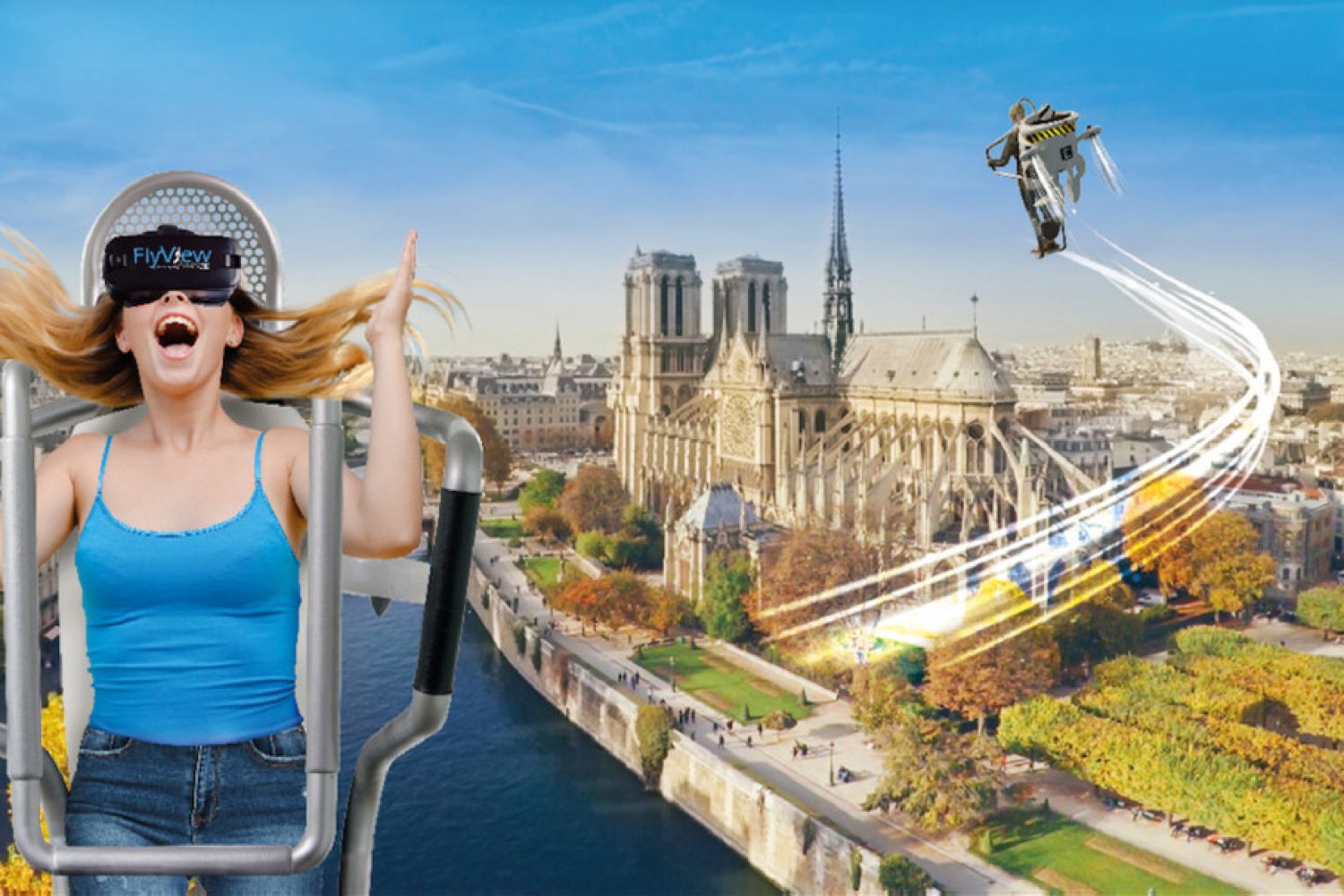
FlyView Paris: Behind the Scenes of a 360° VR Jetpack Production
FlyView Paris was an ambitious immersive project built around a fascinating challenge: how do you film Paris in 360°, from the air, and make viewers feel as if they are actually flying above the city?
I had the opportunity to work on the original production as a 360° Supervisor, 360° Camera Operator and Pre-Stitching Artist.
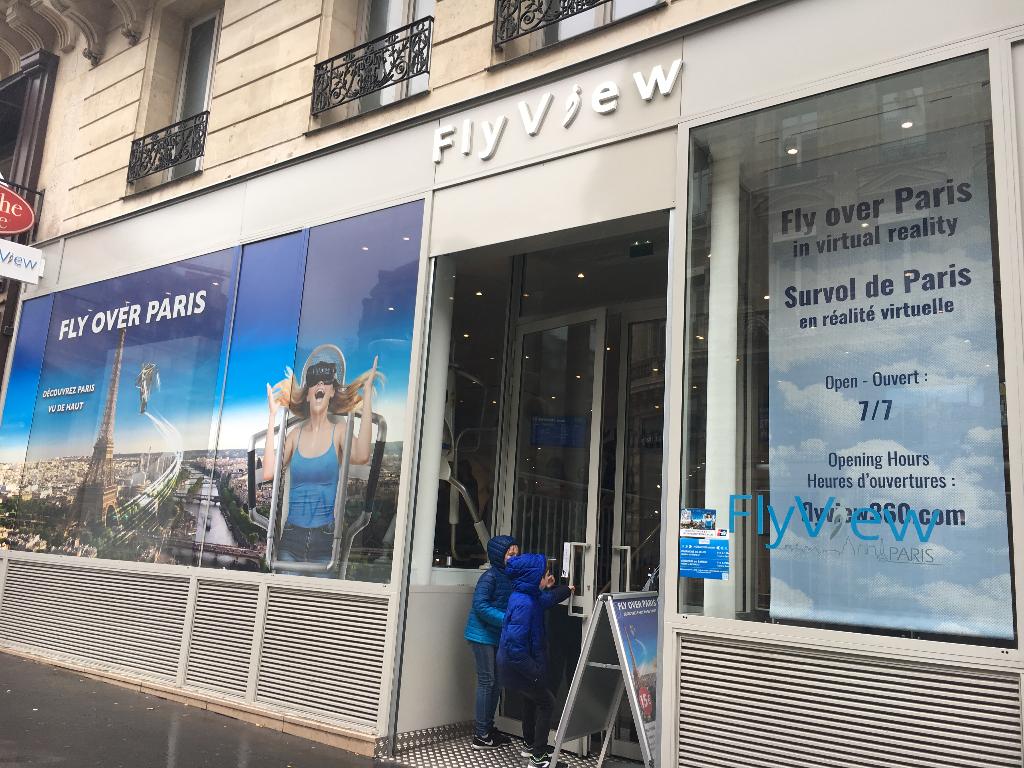
The concept was particularly ambitious for its time: creating a virtual reality experience in which visitors could fly over Paris while wearing a VR headset and standing on a jetpack simulator.
FlyView Paris opened to the public in 2018 and welcomed visitors for more than six years before permanently closing on October 30, 2024.
Looking back at the production today also offers an interesting perspective on how far 360° video, virtual reality and immersive technologies have evolved over the past decade.
Exceptional Aerial Filming Over Paris
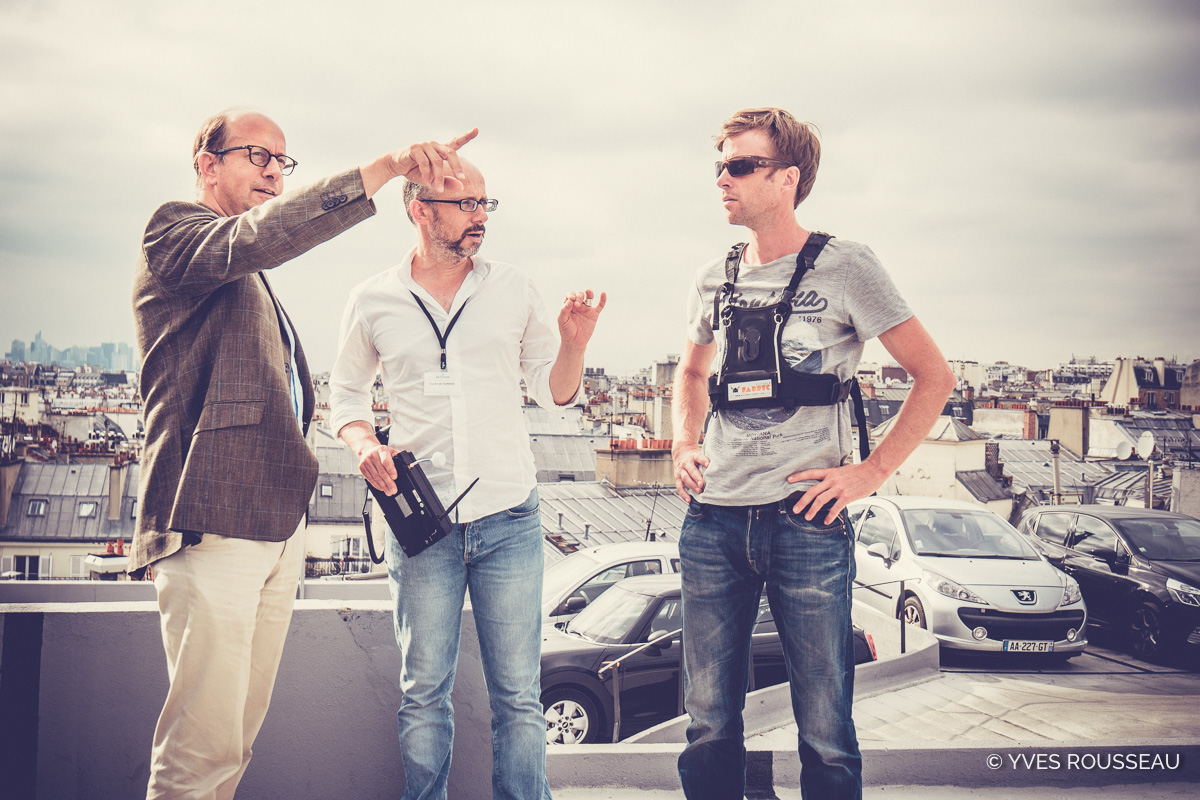
One of the most remarkable aspects of the FlyView Paris production was obtaining the necessary authorizations to capture aerial 360° footage over Paris, including around some of the capital’s most iconic monuments.
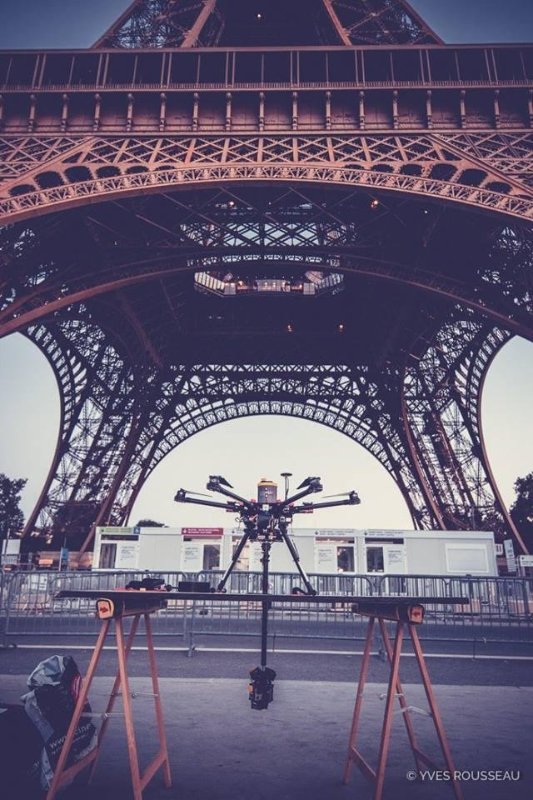
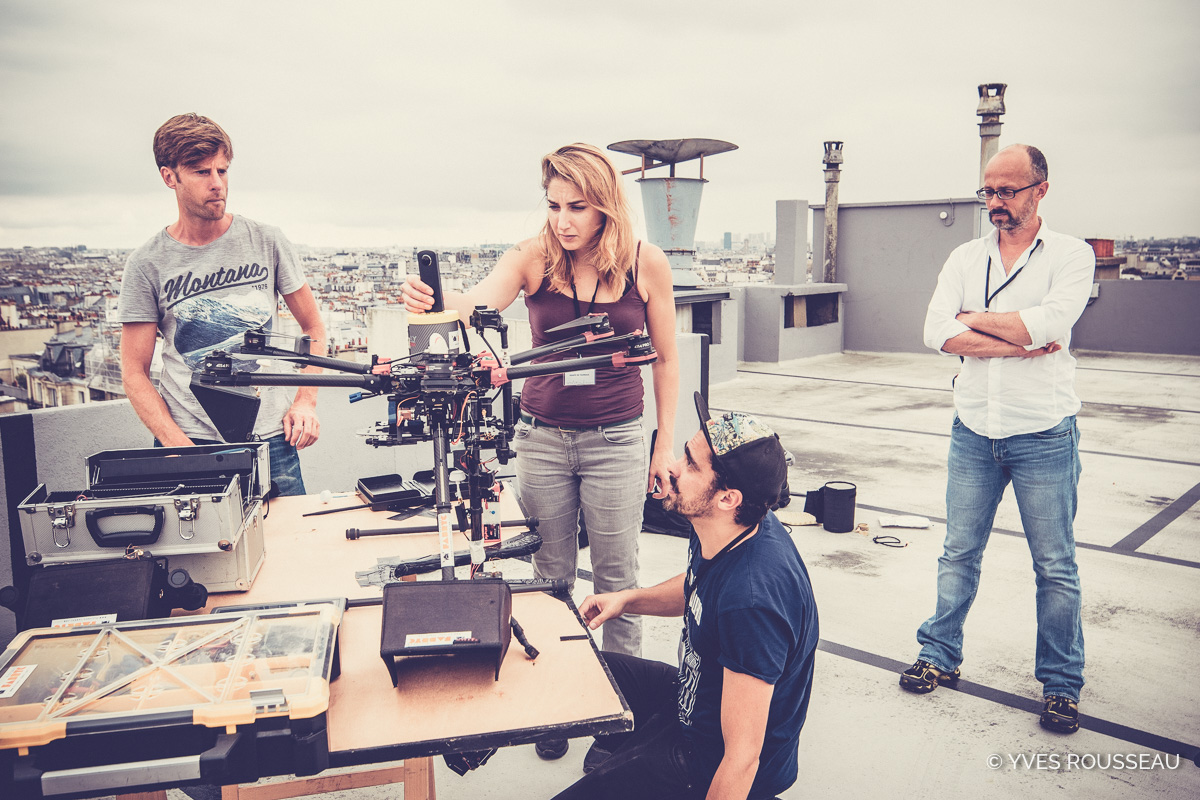
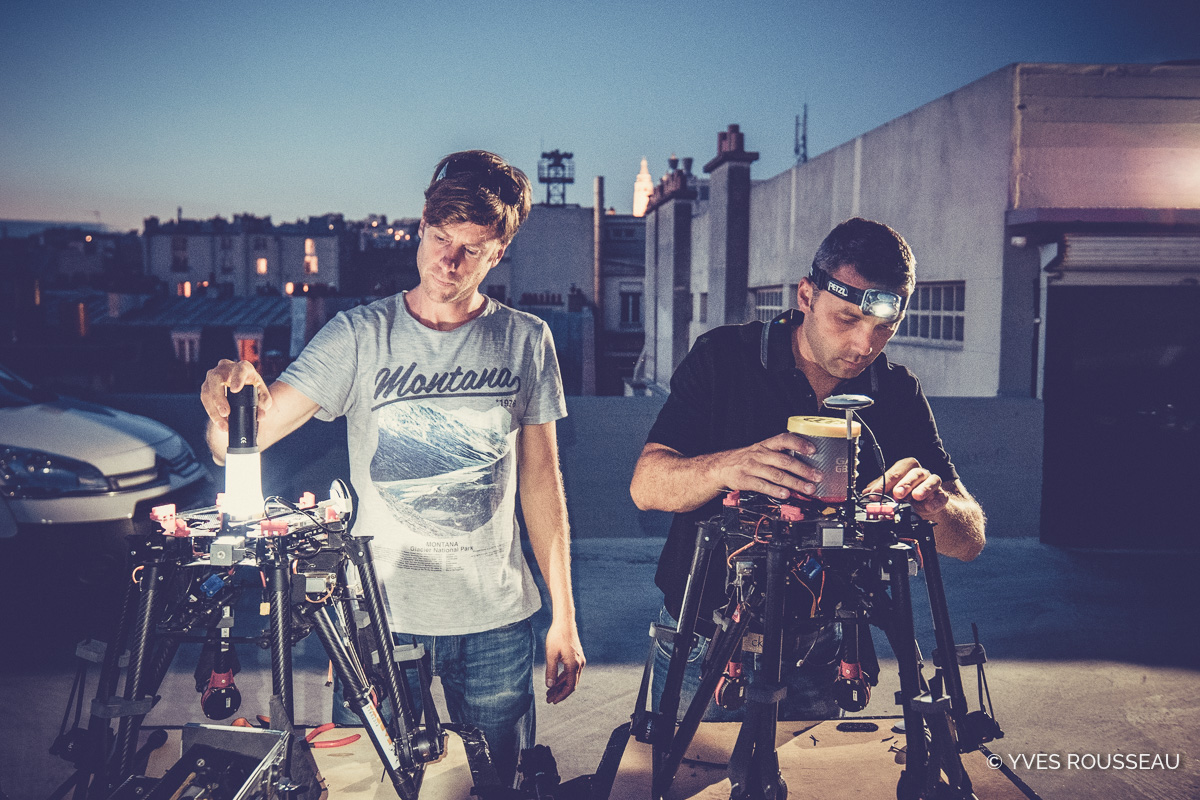
Drone flights over central Paris are highly restricted, making this a particularly complex filming environment. For FlyView, special authorizations allowed the team to capture real aerial footage using a drone equipped with a custom multi-camera 360° system.
Among the most memorable sequences was the flight around the Eiffel Tower, offering viewpoints that would normally be extremely difficult to capture for a film production.
This wasn’t a computer-generated reconstruction of Paris. The experience was built around real aerial footage captured above the city, making the combination of drone operation, 360° capture and the necessary flight authorizations a major part of the production challenge.
But the drone wasn’t the only aerial solution we used.
For another part of the shoot, we took the 360° camera aboard an airship to fly over Notre-Dame Cathedral, creating a completely different type of movement and aerial perspective.
Using different aerial platforms — including the drone around the Eiffel Tower and the airship over Notre-Dame — allowed us to capture real 360° views of Paris from perspectives that would otherwise have been extremely difficult to achieve.


Creating the Illusion of Flying Over Paris
The concept behind FlyView was easy to explain: give visitors the sensation of flying over Paris and discovering the city from an entirely new perspective.
Turning that idea into an immersive experience was considerably more complicated.
Unlike traditional filmmaking, in 360° production the viewer can look everywhere: in front, behind, above and below.
There is virtually no off-camera space.
Crew members, technical equipment, camera mounts and everything that would normally be hidden behind the camera have to be anticipated and managed differently.
When the 360° camera itself is moving — and particularly when capturing aerial footage — those constraints become even more challenging.
FlyView Paris: An Ambitious 360° VR Production for Its Time
We worked on the footage for the original experience around 2015, when 360° video production was very different from what it is today.
Camera systems were more complex, workflows were heavier and stitching software offered far less automation.
Every shot therefore required careful preparation.
Camera positioning, movement, vibration, exposure, parallax between lenses, objects close to the camera and potential stitching zones all had to be considered during production.
The objective wasn’t simply to capture beautiful aerial footage of Paris.
We needed to create images designed specifically to work inside a VR headset, while maintaining enough visual consistency and stability to preserve the viewer’s sense of presence and movement.
The ultimate objective was to make people feel that they were actually flying.
My Role: 360° Supervision, Camera Operation and Pre-Stitching
On this production, I worked on 360° supervision, while also operating the 360° camera systems and working on the pre-stitching of the footage.
Combining these responsibilities was particularly valuable.
In immersive production, many problems encountered during post-production actually originate during the shoot.
The position of an object relative to different lenses, something passing too close to the camera, vibration, exposure changes or camera movement can all make the stitching process significantly more difficult.
360° supervision therefore means anticipating these constraints on set and thinking about every shot in terms of the final immersive experience.
From 360° Capture to Stitching
A 360° camera system uses multiple lenses to simultaneously capture different directions around the camera.
These images then have to be combined to reconstruct a continuous spherical image.
This process is known as stitching.
Pre-stitching is an essential stage of a 360° workflow. It allows the production team to review captured footage, evaluate the transitions between cameras and identify potential issues before final post-production.
With moving footage — and aerial footage in particular — this process becomes considerably more demanding.
Vibration, camera movement, parallax and objects close to the camera can make stitching seams visible and immediately break the illusion of immersion.
Working across both on-set 360° supervision and post-production allowed us to maintain continuity between the way the footage was captured and the requirements of the final VR experience.
When 360° Video Meets a Physical Attraction
One of the strengths of FlyView was that the experience wasn’t limited to watching a 360° film through a headset.
The footage was integrated into a physical experience.
Visitors stood on platforms designed to resemble jetpacks while wearing VR headsets. Platform movement and sensory effects accompanied the imagery to reinforce the sensation of travelling through the air.
The result existed at the intersection of several disciplines:
360° filmmaking, virtual reality, physical attractions and immersive tourism.
The audience was no longer simply watching an image.
They were placed inside the experience.
How the FlyView Experience Continued to Evolve
FlyView Paris opened to the public in 2018 and gradually expanded its catalogue of immersive experiences.
The original flying concept later evolved with Le Survol de la France (Fly Over France), which took the experience beyond Paris.
This new generation of the attraction combined 360° footage, 3D environments, dynamic jetpack platforms, wind, vibration and interactive elements.
The evolution of the FlyView concept illustrates just how rapidly immersive technology progressed during this period.
Looking Back More Than Ten Years Later
The tools available to immersive filmmakers have changed dramatically since the original production.
360° cameras have become more compact, capture resolutions have increased, drones can now achieve movements that were once extremely complex to produce, and stitching software has become significantly more powerful.
VR headsets have also improved enormously in resolution, display quality and comfort.
But some fundamental principles remain exactly the same.
We still need to understand where the viewer is positioned.
We still need to anticipate where they may look.
We still need to think about stitching zones and the relationship between subjects and individual camera lenses.
Most importantly, we still need to design the capture around the final viewer experience, rather than simply approaching 360° as conventional filmmaking in every direction.
That remains one of the most important lessons I have learned through many years of immersive production.
FlyView Paris: An Important Project in My VR Journey
FlyView Paris permanently closed its doors on October 30, 2024, after more than six years of operation.
Nevertheless, the project remains an important part of my journey in VR and 360° production.
It represents an exciting period when we regularly had to invent technical solutions to create images and experiences that, only a few years earlier, would have been extremely difficult — or sometimes impossible — to achieve.
More than ten years after this production, I continue to work on immersive projects with the same philosophy: 360° supervision, capture, stitching and the viewer experience should be considered together from the very beginning of a project.




Credits – Original FlyView Paris Production
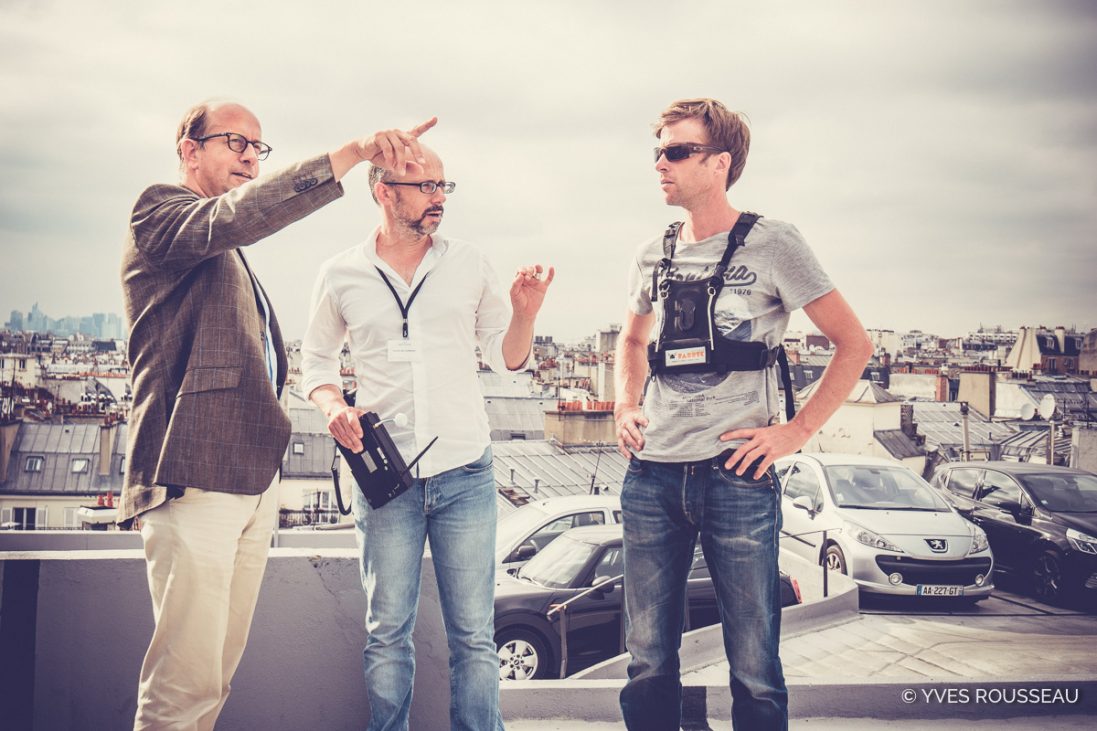
Producteur & Réalisateur Arnaud HOUETTE, Chefs de projet Patrick BESENVAL, Sonia CLEMENT, 1er assistant réalisateur Xavier DOUIN, 2e assistante réalisateur Coline MORAND, 3e assistant réalisateur Marc BOUBLI, Casting Figuration Virginie ROCCHIETTA, Anne-Bénédicte THIAM, Directeur de Production Bernard BERCERON, Administrat. de Production Nelly BESSE-GOUGAY, Régisseur Général Bruno SESTI, Régisseuse Adjointe Valérie COMET, Assistant Régisseur Adjoint Mikaël DELEAU, Hugues DAVEZAC, Guéric HOUETTE, Accessoiriste de plateau Frédéric CASELLAS, Conseiller Technique 360° Patrice GARLOT, Opérateurs 360° Olivier GEORGES, Michael KOLCHESKY, Data Manager Martin LOPEZ, Monteuse Pré-stiching Michael KOLCHESKY, Chef Machiniste Jean CHESNEAU, François PERRAULT- ALIX, Machiniste Grégoire BENZAQUEN, Technicien Grue Philippe MOURIER, Responsable et conseiller Technique Luc POULLAIN, Pilote Benjamin COLLETTE, Opérateur tête Gerome IACHKINE, Télépilote Cyril BARBANCON, Télépilote Claude TARDY, Pilote Drône Charel FABRY, Assistant technique Vincent DELMONT.